Where Are China's Avatar Mountains and How Can You Visit?
The Avatar Mountains in China are in Zhangjiajie, Hunan Province, mainly inside Zhangjiajie National Forest Park within the wider Wulingyuan Scenic Area. If you want the tall sandstone pillars that look like Pandora, put Yuanjiajie first, then add Tianzi Mountain or Golden Whip Stream depending on your time and energy.
What are the Avatar Mountains in China?
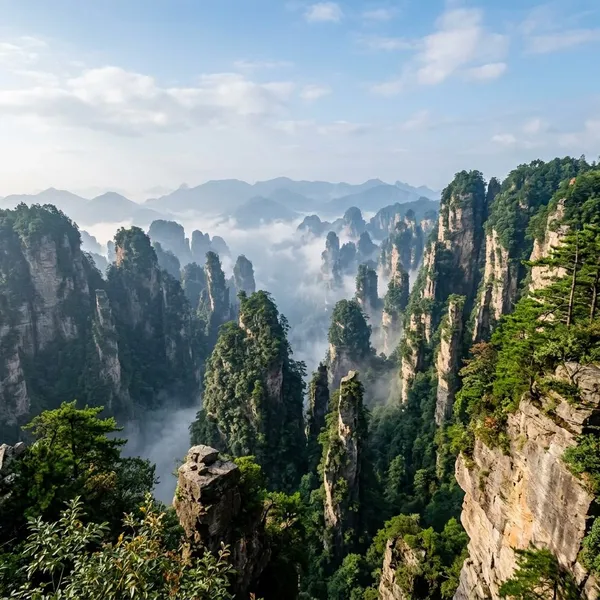
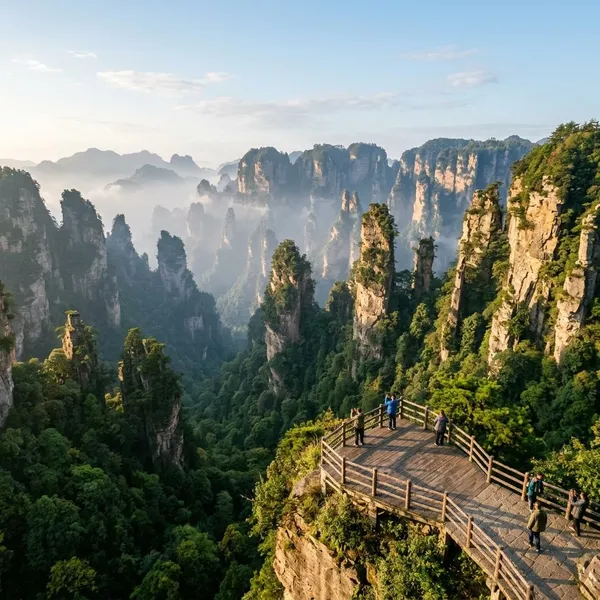
The name "Avatar Mountains" is a travel nickname, not the official name of one mountain. It usually refers to the pillar-filled landscape around Zhangjiajie National Forest Park, especially the viewpoints in Yuanjiajie.
Zhangjiajie National Forest Park is the main area
Zhangjiajie National Forest Park is where most first-time visitors should focus. This is the area with the quartz-sandstone pillars, forested ravines, shuttle routes, cable cars, and viewpoints that appear in the classic photos.
Do not confuse the park with Zhangjiajie city. The city is useful for trains, flights, and Tianmen Mountain, but the pillar scenery sits farther out around the Wulingyuan area.
Wulingyuan is the wider scenic area
Wulingyuan is the larger protected scenic area that includes Zhangjiajie National Forest Park and other zones. You will see this name on hotel listings, entrance information, maps, and transport signs, so it is not just an official label.
If your main goal is the pillar landscape, staying near Wulingyuan usually makes the trip easier than staying in Zhangjiajie city. It saves morning travel time, which matters when viewpoints and elevators get busy later in the day.
Yuanjiajie has the best-known Avatar scenery
Yuanjiajie is the area to prioritize if you have only one strong sightseeing day in the forest park. It has the most recognizable Avatar-style scenery, including the pillar now known as Avatar Hallelujah Mountain.
Tianmen Mountain is a separate nearby attraction
Tianmen Mountain is not part of the main Avatar pillar area. It is closer to Zhangjiajie city and is known for its huge natural arch, cliffside walkways, glass paths, mountain road, and long cable car ride.
Add Tianmen Mountain if you have an extra day or want a different kind of dramatic mountain scenery. If your trip is short and your priority is the floating-pillar look, visit Zhangjiajie National Forest Park first and treat Tianmen as a bonus.
Why are they called the Avatar Mountains?
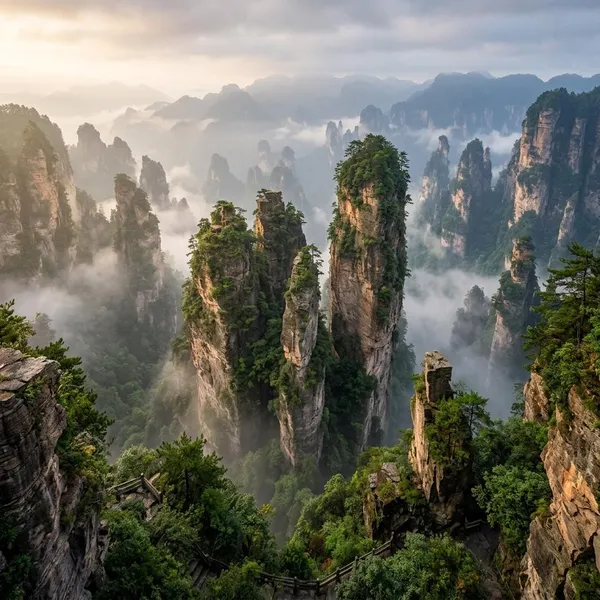
They are called the Avatar Mountains because Zhangjiajie's tall, narrow sandstone pillars became strongly associated with the floating mountains of Pandora from the film Avatar. The film world is fictional, but the visual comparison is easy to understand when mist fills the valleys.
The sandstone pillars resemble Pandora
The pillars rise sharply from deep green valleys, and mist can hide the lower slopes so the tops look suspended in the air. Clear weather shows the shapes and scale; misty weather gives the scenery its more surreal, floating look.
Zhangjiajie became closely linked with Avatar
After the movie became globally popular, tourism promotion, media coverage, and traveler photos helped tie Zhangjiajie to the Avatar image. That is why many people search for the movie nickname before they learn the official place names.
One Yuanjiajie pillar became Avatar Hallelujah Mountain
One pillar in Yuanjiajie, formerly known as Southern Sky Column, was renamed Avatar Hallelujah Mountain after the film connection took off. It is worth seeing, but the real impact comes from the whole ridge of pillars and viewpoints around it, not only the named rock.
Best things to see in the Avatar Mountains
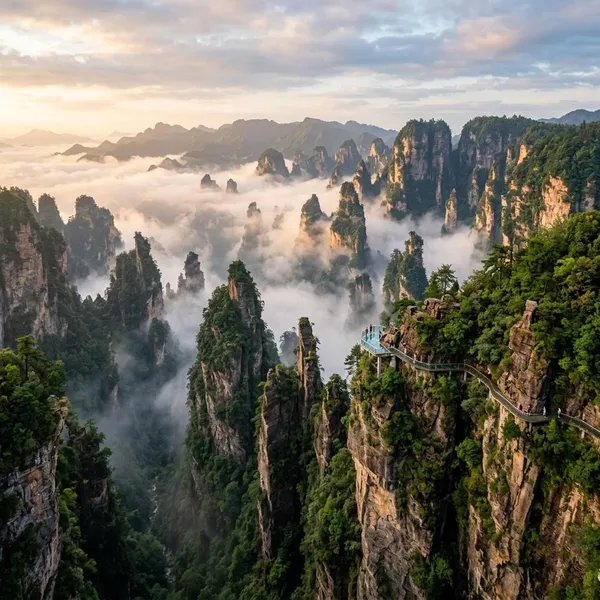
A first visit works best when you mix upper viewpoints with at least one lower valley section. If you only chase photo platforms, the day can become a loop of buses and queues; if you add a stream walk or quieter viewpoint, the landscape feels much more complete.
Yuanjiajie and Avatar Hallelujah Mountain
Yuanjiajie is the must-see area for the iconic pillar views. It gives you the clearest connection to the Avatar nickname, with Avatar Hallelujah Mountain and several platforms looking across dense clusters of stone towers.
- Best for: first-time visitors and short itineraries.
- Watch out for: crowds around the most famous platforms.
- Good strategy: go early or visit when mist is moving rather than waiting for perfect blue sky.
Tianzi Mountain
Tianzi Mountain is better for wide panoramas than for one famous landmark. The views feel layered, with ridges and pillars stretching across the horizon, especially when cloud bands move through the valleys.
Bailong Elevator
The Bailong Elevator is both a shortcut and an attraction. It rises along a cliff face and helps connect lower areas with upper viewpoints, which can save a lot of energy on a large sightseeing day.
Use it especially if you are traveling with family, have limited stamina, or want to see Yuanjiajie without turning the day into a long uphill hike. The main downside is waiting time during busy periods, so avoid treating it as a quick transfer on weekends or holidays.
Golden Whip Stream
Golden Whip Stream is the best choice when you want to experience the park from below instead of only looking down from platforms. The trail follows a valley with water, forest shade, and stone walls rising above you.
Huangshi Village
Huangshi Village, also written as Huangshizhai or Yellow Stone Village, is a good add-on if you have extra time after the headline areas. It offers high viewpoints and a different angle on the pillar landscape.
Skip it if you only have one rushed day. Choose it if you have a second forest-park day, enjoy viewpoint circuits, or want a less obvious stop beyond Yuanjiajie and Tianzi Mountain.
Best time to visit the Avatar Mountains
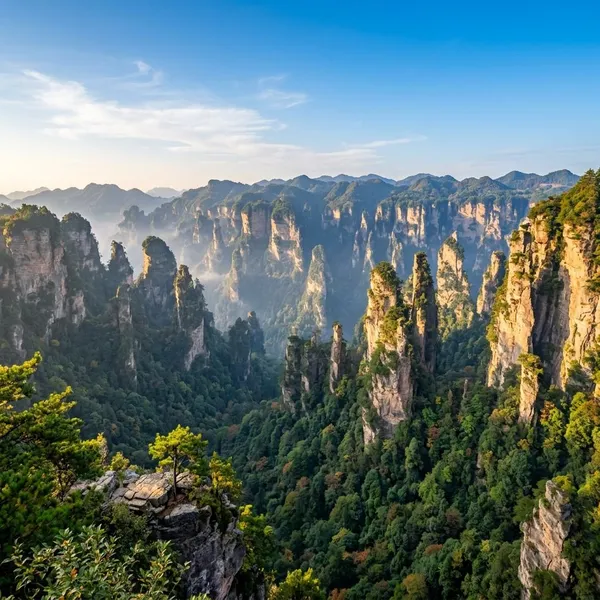
Spring and autumn are usually the best seasons for Zhangjiajie. Spring gives greener scenery and more mist; autumn often gives milder weather and clearer long-distance views.
Spring for green scenery and mist
Spring is ideal if you want lush forest and the misty "floating mountain" effect. The trade-off is that paths may be damp and some viewpoints can disappear into cloud for a while.
Pack for changeable conditions rather than expecting one perfect forecast. Shoes with decent grip and a flexible route matter more here than trying to predict the exact best hour days in advance.
Autumn for mild weather and clearer views
Autumn suits travelers who care most about visibility and comfortable full-day sightseeing. The air is often clearer than in wetter periods, so the ridgelines and pillar groups can be easier to appreciate.
Early mornings for quieter viewpoints
Early mornings are one of the easiest upgrades you can give your trip. Popular areas such as Yuanjiajie, Tianzi Mountain, and major transport points get busier as the day goes on.
- Go early for: softer light, fewer people, and shorter waits.
- Prioritize early: Yuanjiajie or any route using the Bailong Elevator.
- Avoid leaving late: transport queues can eat into the best viewing hours.
Weekdays for fewer crowds
Weekdays are noticeably better than weekends when your schedule is flexible. Crowds affect more than photos; they slow down shuttle buses, cable cars, elevators, and the simple act of moving between viewpoints.
If possible, avoid major Chinese public holidays. A weekday in a good season can feel like a completely different trip from a peak-holiday visit, even if the weather is the same.
How to plan your first Avatar Mountains visit
The main planning mistake is trying to treat Zhangjiajie as one simple attraction. The forest park is large, Tianmen Mountain is separate, and the best route depends on whether you have one day, two days, or a more relaxed three-day visit.
- One full day: focus on Yuanjiajie and Tianzi Mountain.
- Two full days: add Golden Whip Stream or Huangshi Village.
- Three days: include Tianmen Mountain as a separate day.
Stay near Wulingyuan for easier park access
Stay near Wulingyuan if Zhangjiajie National Forest Park is your main reason for visiting. It puts you closer to a main entrance and makes early starts much easier.
Staying in Zhangjiajie city can still make sense if you arrive late, leave early, or plan to visit Tianmen Mountain first. For the classic Avatar Mountains scenery, though, Wulingyuan is usually the more convenient base.
Start with Yuanjiajie and Tianzi Mountain
Yuanjiajie and Tianzi Mountain make the strongest first-day combination because they deliver the major upper-level views. If weather is clear or partly misty, go for these before lower-priority stops.
If the top is completely fogged in, do not stubbornly waste the whole morning at one platform. Shift to a lower walk such as Golden Whip Stream, then try the upper viewpoints again when conditions improve.
Use lifts and shuttles to save time
Use the park shuttles, cable cars, and elevators as part of the plan, not as a last resort. Zhangjiajie is steep and spread out, and doing everything on foot can leave you tired before the best viewpoints.
- Use transport for elevation: save your legs for scenic walks.
- Expect queues: build in buffer time around famous routes.
- Do not overpack the day: one delay can make an ambitious route unrealistic.
Leave room for changing mountain weather
Mountain weather can switch quickly between clear views, drifting mist, and full cloud. That is not always bad; some of the most memorable Zhangjiajie moments happen when mist moves through the pillars.
A flexible plan is especially important for photographers and short-stay visitors. Check visibility when you arrive, keep one backup section in mind, and avoid booking your day so tightly that one foggy hour ruins the whole route.
Conclusion
The best way to visit the Avatar Mountains is to stop thinking of them as one single viewpoint and plan around the real names: Zhangjiajie National Forest Park for the pillars, Yuanjiajie for the most iconic scenery, Wulingyuan for easier access, and Tianmen Mountain only as a separate add-on. Give yourself enough time for weather and transport, choose spring for mist or autumn for clearer views, and the trip becomes far easier to enjoy.