Which Avatar Commander Deck Should You Build?
If you are choosing between avatar commander decks, start with the commander first, not the theme pile. Aang is the broad choice if you want every element and do not mind a harder mana base, while Fire Lord Azula is cleaner if you want a focused Grixis spells deck. A set-only list can be fun for flavor, but most players will get a smoother deck by upgrading the lands, ramp, draw, and removal around the Avatar cards they care about most.
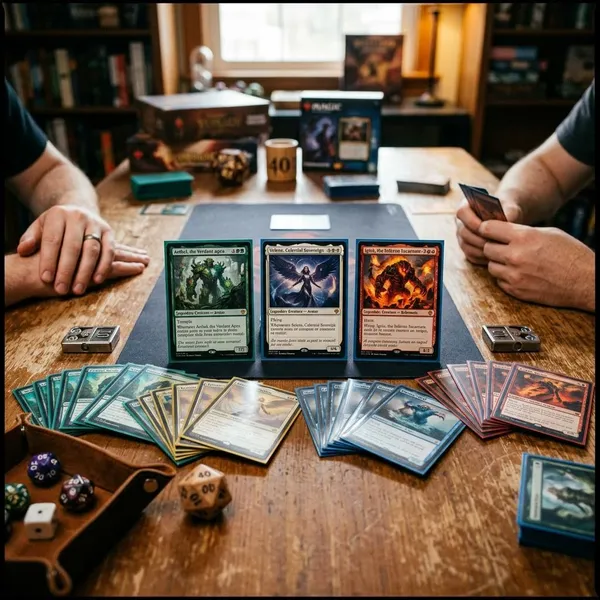
Best Avatar commanders to build around
The best Avatar commander is the one that gives your 99 a clear job. A cool legend is not enough if the deck cannot cast its spells, protect its engine, or actually finish a game. For a first build, compare commanders by three practical checks: color difficulty, support needed, and how the deck wins.
Avatar Aang for five-color bending
Avatar Aang is the natural pick if you want the full elemental experience. Five colors let you use the widest Avatar card pool, mix bending mechanics, and build the most flexible late-game deck.
- Best for: players who enjoy long games, toolbox turns, and broad theme coverage.
- Watch out for: expensive mana bases and scattered subthemes.
- Good first rule: support several elements, but do not force every mechanic equally.
Fire Lord Azula for Grixis spell copying
Fire Lord Azula is one of the sharpest choices because her plan is easy to understand: attack, cast efficient spells, copy the right ones, and turn tempo into pressure. Grixis gives access to removal, cantrips, counterplay, and damage-based finishers without the burden of five-color fixing.
She suits players who like making decisions during combat. If you prefer tap-out creature decks, Azula may feel fiddly. If you like holding up mana and making opponents guess, she is probably the most rewarding Avatar commander to tune.
Aang the Last Airbender for Lesson spells
Aang the Last Airbender works better when you treat Lessons as a useful spell package, not as a reason to include every card with the right label. The deck wants flexible effects that smooth turns, answer problems, or keep spells flowing.
Other Avatar legends for focused themes
Other Avatar legends are worth considering if you want a cheaper, cleaner, or more character-driven deck. A focused two- or three-color commander can outperform a shaky five-color build, especially at casual tables where a stable curve matters more than maximum card access.

How Avatar mechanics work in Commander
The Avatar mechanics are flavorful, but they do not all belong in the same deck. Some reward attacking, some reward resource conversion, and some need specific support before they become reliable. The practical question is not which mechanic is coolest; it is which one your commander can trigger often without weakening the rest of the deck.
Firebending creates temporary combat mana
Firebending is strongest in decks that already want to attack. Temporary combat mana is useful when you can spend it immediately on tricks, removal, activated abilities, or extra pressure after attackers are declared.
Airbend exiles cards for later casting
Airbend gives you timing flexibility. It can protect a key permanent, reuse an enters-the-battlefield effect, or set up a later cast when you have more mana or a better board state.
- Good home: decks with ETB creatures or cast-from-exile payoffs.
- Bad fit: decks that need every card to affect the board immediately.
- Practical check: ask whether delaying the card helps your next turn or only slows you down.
Waterbend uses creatures and artifacts to pay costs
Waterbend turns spare permanents into action. Tokens, Treasures, Clues, and creatures that have already done their job make the cost easier to absorb.
Earthbend turns lands into creatures
Earthbend is powerful because it turns your mana base into pressure without using extra cards from hand. It fits landfall, counters, recursion, and combat decks especially well.
Lessons support spell-based synergies
Lessons are best as glue. A small, efficient Lesson package can give spell-based Avatar decks more flexible answers and smoother sequencing, especially when the commander rewards casting or copying spells.
A large Lesson package is not automatically better. If the cards are too narrow, they fill your hand without affecting the board. Choose the ones that solve problems your deck actually has.
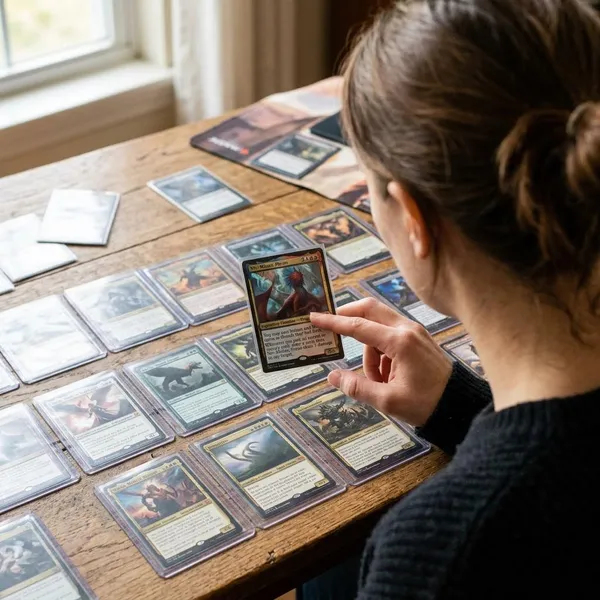
How to choose an Avatar commander
Choosing the commander decides your colors, your budget pressure, and the kind of games you will play. A five-color deck may be the most complete Avatar experience, but a tighter commander is often better for a beginner, a smaller budget, or a playgroup that prefers mid-power games.
Pick a favorite character
Character preference matters in Commander because you will play the same deck repeatedly. If two commanders are close in strength, choose the one you are excited to shuffle up again after a bad game. That enthusiasm usually leads to more testing and better cuts.
Check the commander's color identity
Color identity controls what your deck can include and how hard the mana base will be. Aang-style five-color builds offer the most options, but they also demand more fixing. Azula's Grixis identity is narrower, yet it is much easier to make consistent.
| Choice | What it gives you | What to check first |
|---|---|---|
| Five-color Aang | Maximum Avatar card access and bending variety | Can the mana base cast early spells reliably? |
| Grixis Azula | Focused spells, removal, and tempo pressure | Do you have enough cheap instants and protection? |
| Two- or three-color legend | Lower cost and clearer deckbuilding | Is the theme strong enough to close games? |
Match the ability to your playstyle
A powerful commander can still be wrong for you. Choose Aang if you enjoy layered value and bigger board states. Choose Azula if you enjoy combat timing, stack interaction, and explosive turns. Choose a focused legend if you prefer one clear plan over managing several mechanics.
For a newer Commander player, a commander with one repeatable pattern is usually easier to learn than a deck full of small conditional triggers. For an experienced player who likes puzzle turns, the broader Aang builds may be more satisfying.
Set a target power level
Decide whether the deck is meant to be a flavorful set-only build, a solid casual upgrade, or a sharper tuned list. Each version uses different card choices. A set-only deck can be charming but may stumble on fixing and finishers; a tuned deck runs better but can lose some Avatar identity if every support card becomes a generic staple.
Decide how closely to follow the theme
A strict Avatar-only deck is best when your group values theme over efficiency. A hybrid deck is better when you want the deck to hold up over many games. The most practical middle ground is to keep the commander, signature characters, and key bending cards, then upgrade the mana, draw, removal, and protection with outside cards.
Set a realistic deck budget
Budget problems usually start with the mana base. Price lands and fixing before chasing splashy finishers, especially for five-color Aang. If that cost feels too high, do not force it; a narrower commander can still feel thematic and may play much better on a realistic budget.
- Buy first: commander, core synergy pieces, necessary lands, and cheap interaction.
- Delay: luxury staples that only improve an already functional deck.
- Upgrade later: the cards that underperform after real games, not the ones that look weakest on paper.
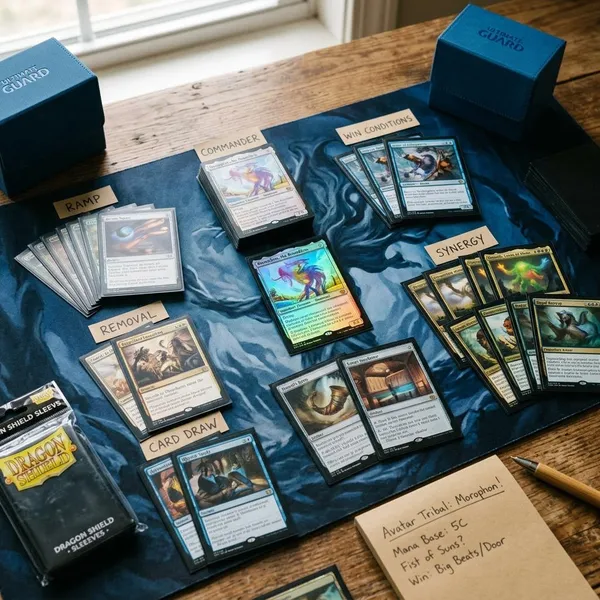
How to build an Avatar Commander deck
A good Avatar deck still needs the same foundation as any Commander deck: mana, draw, interaction, protection, synergy, and finishers. The theme should sit on top of that structure. If the deck starts as a pile of favorite cards, it may look fun but fail whenever the commander is removed or the opening hand misses colors.
Choose the commander and main strategy
Write the deck's plan in one sentence before filling the last 30 cards. For example: "Azula attacks safely and copies cheap spells until burn or combat damage ends the game." If the sentence needs five clauses, the deck is probably trying to do too much.
Add ramp and mana fixing
Ramp is not just about having more mana; it is about casting the right colors at the right time. Five-color decks need a higher fixing density, while Azula can lean on Grixis rocks, Treasures, and efficient lands. If a hand has spells but cannot cast them, that is a mana problem, not bad luck.
- Check opening hands: can you cast early ramp or interaction?
- Check commander timing: can your commander arrive before the table is too far ahead?
- Check color strain: are too many early cards asking for different double colors?
Include reliable card draw
Card draw keeps the deck alive after the first wave of removal. Mix quick refill spells with repeatable sources if your colors allow it. The more flavorful or lower-powered your card choices are, the more important draw becomes because you need to see enough cards to assemble the good parts of the deck.
Add removal and protection
Removal stops opposing engines; protection keeps your own plan from collapsing. Azula needs protection because she has to attack. Earthbend decks need it because losing animated lands hurts. Aang decks need it because expensive engines are poor investments if they die before producing value.
Choose bending payoffs and support cards
Add bending payoffs after the shell works. Aang wants overlap across elements. Azula wants cheap spells and copy rewards. Waterbend wants expendable creatures or artifacts. Earthbend wants protection, land recursion, or reasons to attack with lands.
Add clear ways to win
Do not confuse value with a win condition. A deck that draws cards and survives still needs a way to end the game. Avatar decks usually close through combat pressure, copied damage, token boards, large animated lands, or repeated advantage that turns into an overwhelming board.
Test and replace weak cards
Play several real games before making expensive changes. Goldfishing shows curve issues, but multiplayer games reveal which cards are too slow, too narrow, or only good when you are already winning.
- Cut first: cards that sit in hand with no good window to cast.
- Watch closely: cards that are flavorful but never affect the outcome.
- Keep notes: mana problems, missing finishers, and commander removal patterns.

How to build Fire Lord Azula
Fire Lord Azula works best as a proactive spells-and-combat deck. She does not want to sit back like a slow control commander; she wants to attack, make opponents respect open mana, and copy spells that change the combat step or push damage through.
Add spells that work during combat
Prioritize spells that are useful while Azula is attacking: removal for blockers, tricks that change combat math, draw spells that keep pressure going, and interaction that can punish opponents for acting at the wrong time. A spell that is good both during combat and outside combat is usually better than a narrow trick.
Use low-cost instants for easy copying
One- and two-mana instants are the backbone of the deck. They let you attack without tapping out and make copied spells feel efficient instead of clunky. If too many cards cost four or more, Azula loses the tempo advantage that makes her dangerous.
- Good targets: cheap removal, cantrips, protection, and flexible burn.
- Be careful with: splashy spells that are only strong when copied.
- Curve check: your hand should let you attack and still represent action.
Protect Azula while she attacks
Azula will attract removal because opponents can see the snowball coming. Use cheap protection, counterplay, or equipment-style support that helps her survive combat and targeted removal. Protection is not a bonus slot here; it is part of the engine.
Include ways to grant evasion
Evasion turns Azula from a risky attacker into a reliable trigger source. Flying, unblockable effects, menace-like pressure, or simply removing the best blocker can all create the safe attack window she needs.
Turn copied spells into finishers
Azula should not spend the whole game making tiny value trades. Include a few spells or board states where copying turns pressure into a real finish, such as doubled burn, a decisive tempo swing, or a combat step where opponents cannot block profitably.
Conclusion
The strongest choice is usually the commander you can support cleanly. Pick Aang if you want the full elemental spread and are willing to invest in fixing, pick Azula if you want a tighter spells deck with clearer lines, and pick a narrower legend if budget or simplicity matters more. A flavorful deck is more fun when it still casts its spells, protects its plan, and has a believable way to close the game.