What Is the Alternative Learning System in the Philippines?
The alternative learning system meaning is easiest to understand this way: it is a flexible basic education pathway for people in the Philippines who cannot study through regular school. ALS is not an instant diploma or informal tutoring; it is a DepEd-supported route with learning facilitators, modules, assessments, and programs for literacy or equivalency.
What Is the Alternative Learning System?
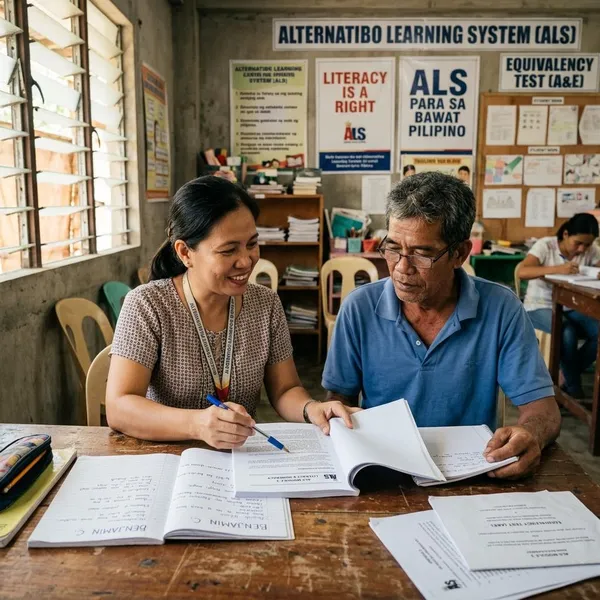
The Alternative Learning System, or ALS, is a parallel learning system in the Philippines. It gives out-of-school youth, adults, and other learners a way to continue basic education outside the usual classroom setup.
The important point is flexibility with structure. ALS can use community learning centers, barangay spaces, homes, libraries, modules, group sessions, or other local arrangements, but it still follows learning goals and assessment processes. That makes it different from casual self-study.
- Choose formal school first when the learner can attend daily classes and follow the regular grade-level system.
- Ask about ALS when work, distance, family duties, age, disability, displacement, or a long school gap makes regular schooling hard to continue.
- Do not treat ALS as a shortcut if the goal is simply to avoid school requirements. Learners still need to study, submit work, and complete assessments.
Who Is ALS For?
ALS is mainly for people who are not being served well by the regular school system. That can include learners who dropped out, adults who never completed basic education, workers with difficult schedules, people in remote areas, and children who face serious barriers to school attendance.
The first thing to check is the learner's actual need. Someone who cannot read comfortably may need basic literacy support. Someone who can already read and write but did not finish elementary or secondary school may be better suited for an equivalency path.
Out-of-school youth and adults
For a teenager who left school to work, ALS can make studying possible without forcing a daily classroom schedule. For an adult parent who stopped school years ago, it can also feel less intimidating than returning to a regular class with much younger students.
The practical value is not only the certificate. Many learners use ALS to rebuild reading, writing, numeracy, confidence, and study habits before moving to training, work opportunities, or further education.
Children facing barriers to formal schooling
For school-age children, regular school should still be considered first when it is safe and realistic. ALS may help when a child is in a remote area, has been displaced, faces disability-related barriers, has fallen far behind, or cannot attend school regularly for serious family or safety reasons. In that situation, the goal is to keep learning moving instead of letting the child lose access completely.
How Does ALS Work?
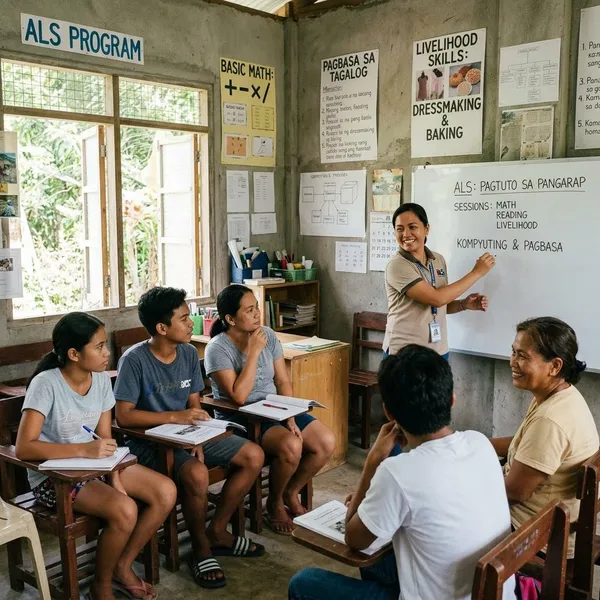
ALS usually starts by finding out what the learner already knows, then placing the learner in the right program or level. From there, learning happens through modules, facilitator support, agreed schedules, progress checks, and completion or equivalency assessment.
Assessment of existing skills
Placement matters because ALS learners do not all start from the same point. A learner who reads well but stopped high school needs a different plan from someone who still struggles with basic reading or number work. The assessment helps avoid lessons that are either too easy to matter or too difficult to continue.
Flexible lessons and learning schedules
The schedule is one of the biggest reasons people ask about ALS. A working learner, a young parent, or someone living far from a school may need evening, weekend, community-based, or module-supported learning, depending on what the local ALS program can offer.
- Good fit: the learner can study regularly but not on a normal school timetable.
- Risky fit: the learner wants flexibility but cannot commit time for modules, meetings, or outputs.
- Best first step: ask the local ALS contact how often learners meet and what work must be completed between sessions.
Teacher support and progress checks
ALS is flexible, but learners are not left alone. Mobile teachers, instructional managers, coordinators, or partner facilitators may guide lessons, check work, answer questions, and monitor whether the learner is ready to move forward.
Assessment for completion and equivalency
Completion depends on the program. In a basic literacy path, progress may focus on functional reading, writing, and numeracy. In the Accreditation and Equivalency path, learners work toward showing that their competencies match the required elementary or secondary level.
Anyone considering ALS for employment, college, or training should ask the receiving school, employer, or training provider what documents they currently accept. Rules and requirements can change, so it is better to confirm before making plans around one expected outcome.
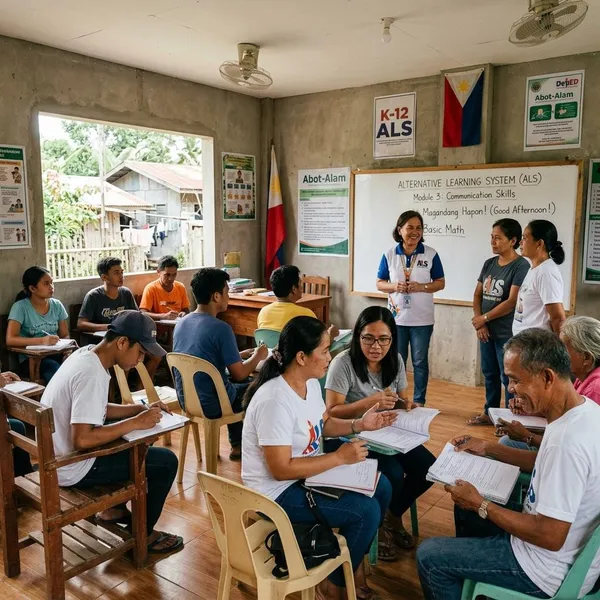
Main ALS Programs
The two main ALS programs answer two different problems. One helps learners who still need basic literacy. The other helps learners who are already literate but did not complete formal elementary or secondary education.
If you are helping someone choose where to start, do not begin with the certificate. Begin with the learner's current ability: Can the learner read instructions, write simple answers, and handle basic numbers? That answer usually points to the better starting path.
Basic Literacy Program
The Basic Literacy Program is for learners who need foundational reading, writing, and numeracy. It is practical by nature: reading signs or labels, writing basic information, understanding simple instructions, handling money, and using numbers in everyday life.
This path is especially important for adults who have managed daily life through memory, help from others, or work experience but still feel blocked by written tasks. Once the foundation is stronger, the learner may be able to move toward more advanced ALS learning.
Accreditation and Equivalency Program
The Accreditation and Equivalency Program is for learners who can already handle basic literacy but did not finish formal schooling. It helps them study competencies aligned with basic education and prepare for assessment.
This is often the better path for someone who left high school because of work, pregnancy, family duties, money problems, or distance, but later wants a recognized way to continue. It is not just "review for a test"; learners still need to build the required knowledge and show readiness.
What Do ALS Learners Study?
ALS learners study skills connected to basic education, but the lessons are usually tied closely to real life. The goal is not only to catch up with missed school topics. Learners should also be able to communicate better, solve everyday problems, make informed choices, and participate more confidently at home, work, and in the community.
The exact delivery can vary by location, but the learning areas commonly include communication, digital exposure where available, math, science, problem-solving, life skills, career awareness, and social responsibility.
Communication and digital skills
Communication skills cover reading, writing, listening, and speaking in useful situations: filling out forms, understanding notices, writing messages, explaining an idea, or preparing for an interview. Where resources allow, learners may also build basic digital familiarity, such as using simple online tools or technology-supported learning materials.
Science, math, and problem-solving
Math and science in ALS should feel useful, not purely academic. A learner might use numeracy for budgeting, measuring, computing change, planning travel costs, or checking quantities for small selling. Science and problem-solving help with observation, health awareness, environmental issues, and practical reasoning.
This is where ALS can be very concrete. A market vendor, a construction helper, a parent managing household expenses, and a learner preparing for further study may all need the same basic skill: thinking through a problem carefully instead of guessing.
Life, career, and social skills
Life, career, and social skills connect learning to adult responsibilities. Topics may include values, self-development, community participation, work readiness, livelihood awareness, rights and responsibilities, and decision-making.
- For daily life: making better choices with money, family duties, health, and communication.
- For work: building habits such as punctuality, clear communication, and task completion.
- For future study: learning how to set goals, follow requirements, and ask for help early.
Conclusion
ALS is worth considering when regular schooling is no longer realistic, but the learner still wants a structured way to continue basic education. The smartest next move is to identify the learner's starting level, ask the nearest DepEd or community ALS contact about available programs, and confirm any requirements if the goal is further study, training, or employment.