How Does Adaptive Learning Personalize Education?
Adaptive learning is useful when learners are not starting from the same place and a fixed lesson path would either bore some people or leave others behind. The basic idea is simple: the system watches how someone performs, then changes the next explanation, question, or practice task to fit what they seem ready for.
What is adaptive learning?
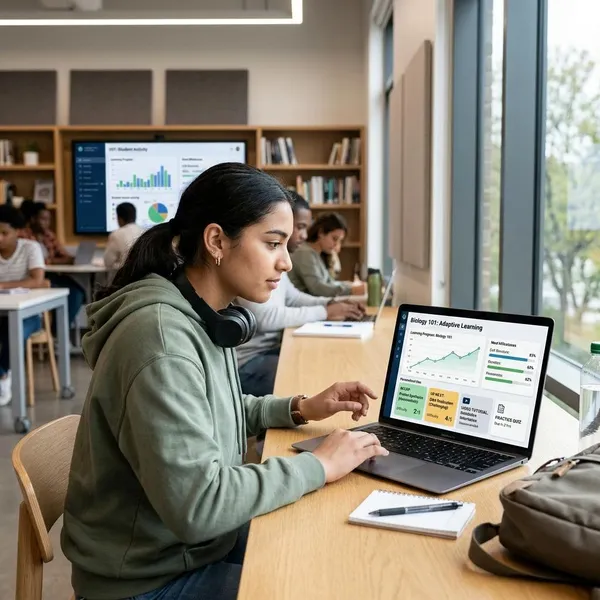
Adaptive learning is instruction that changes based on evidence from a learner's progress. That evidence might come from quiz answers, repeated mistakes, time spent on a task, hint use, or performance across several related skills.
Its value is not just that it feels "personalized." A useful adaptive system makes a practical decision: should this learner move ahead, review a missing skill, see a different explanation, or try a harder task?
Instruction that responds to learner progress
A good tutor already teaches adaptively. If a learner misses the same type of fraction problem three times, the tutor does not keep pushing into algebra as if nothing happened. An adaptive learning platform tries to copy part of that response at scale by changing the next step when performance shows a gap.
This matters most when skills build on each other. In math, grammar, coding, or technical training, one weak foundation can make later lessons feel harder than they need to be.
Adjustments to content, sequence, and assessment
Adaptive learning usually changes one or more of three things:
- Content: the learner sees a hint, worked example, simpler explanation, or extra practice.
- Sequence: the system changes the order of lessons or sends the learner back to a prerequisite skill.
- Assessment: the questions become easier, harder, or more targeted so the system can estimate understanding more accurately.
The best systems do not adapt just for novelty. They adapt because the learner's next task should match a clear learning goal.
How does adaptive learning work?
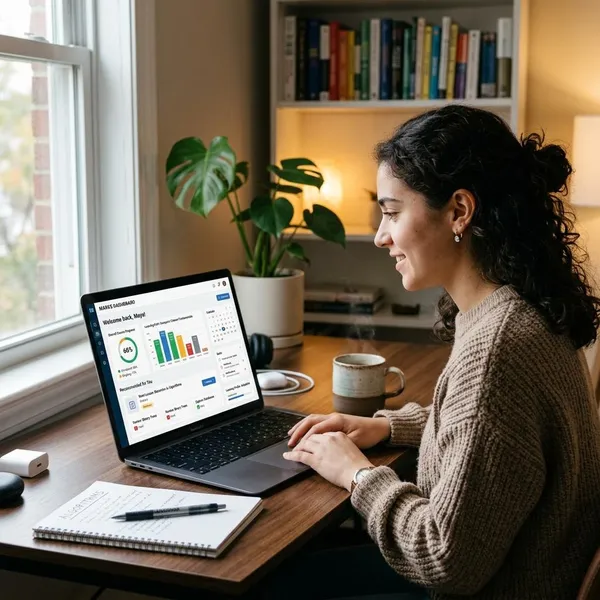
Adaptive learning works as a loop: check what the learner knows, detect gaps, choose a better next step, then check again. Some platforms use simple educator-made rules, while others use statistical models or AI. The important question is not whether the system sounds advanced, but whether its adjustments are useful and understandable.
Assess what the learner already knows
Most adaptive systems start with a placement quiz, a short diagnostic, previous course data, or the learner's first few responses. This starting point keeps the course from beginning too low for an experienced learner or too high for someone with missing foundations.
Identify gaps from answers and performance
Wrong answers are the obvious signal, but they are not the only useful one. Long pauses, repeated retries, skipped hints, and inconsistent performance across similar questions can show whether the learner is guessing, rushing, or missing a concept.
This is where weak adaptive design often shows. If the questions are poorly written, the system may diagnose the wrong problem. A learner might be marked weak in a topic when the real issue is confusing wording or an unclear example.
Adjust the next task or explanation
Once the system spots a likely gap, it may offer a smaller step, a different explanation, a worked example, or a review activity before returning to the original goal. For a self-study learner using a language app, that might mean more practice with past tense verbs before new vocabulary is added. For an employee in onboarding, it might mean a short product refresher before scenario questions continue.
- Useful adjustment: the new task directly targets the mistake.
- Weak adjustment: the learner simply gets more of the same question type.
- Risky adjustment: the system lowers expectations instead of helping the learner reach the original goal.
Reassess progress and update the learning path
Adaptive learning should not make one early judgment and stick with it. A learner who struggled yesterday may be ready to move forward today, while a learner who seemed confident may show gaps once tasks become more complex.
- Start with a baseline: estimate the learner's current level.
- Watch performance: track answers, patterns, time, and support use.
- Choose the next step: adjust content, order, difficulty, or feedback.
- Check again: use the new response as fresh evidence.
- Update the path: move forward, add support, or revisit a prerequisite.
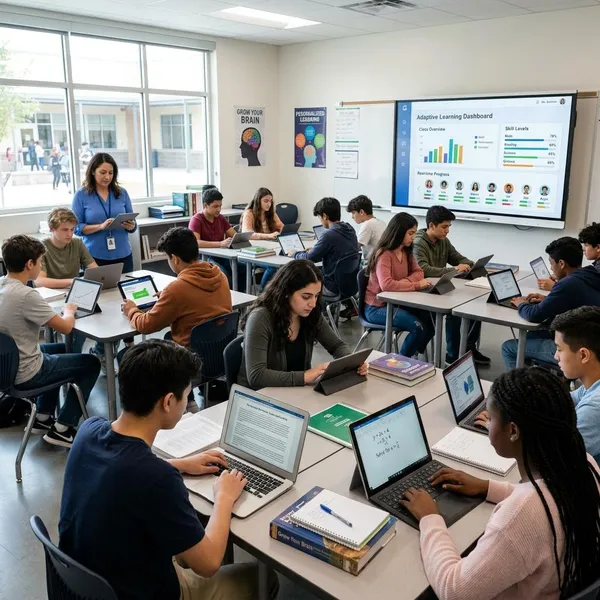
Examples of adaptive learning
Adaptive learning appears in school platforms, test-prep tools, language apps, university homework systems, and workplace training. The common feature is not the subject. It is the response: the platform changes what happens next because of what the learner just did.
Math practice that revisits missed skills
Math is a clear example because later skills often depend on earlier ones. If a learner keeps missing fraction problems, an adaptive system can pause the current lesson, review equivalent fractions or common denominators, and then return to the original problem type.
This is helpful in two different classroom situations. A student who only needs a quick reminder can move on after a few targeted questions. A student with a deeper gap can get a slower path without forcing the whole class to repeat the same material.
Language exercises that adjust difficulty
A language app might increase difficulty after several correct answers, bring back missed vocabulary through spaced review, or add more listening practice if reading tasks are fine but audio tasks are weak. That kind of adaptation is most useful when it keeps the learner challenged without making every exercise feel like a failure.
Workplace training that targets knowledge gaps
In workplace training, people rarely start with the same background. A new employee may need basic product knowledge, while an experienced employee taking annual compliance training may only need review on updated policies.
An adaptive module can let the experienced employee move faster through known material while giving the newer employee more practice before applied scenarios. That saves time, but it also gives managers a better signal than completion alone. Finishing a course is not the same as understanding the parts that matter on the job.
What can adaptive learning improve?
Adaptive learning can improve practice, support, and visibility into learning gaps. It cannot fix weak lessons, replace human judgment, or guarantee better outcomes just because AI is involved.
Practice matched to current skill levels
The strongest everyday benefit is better fit. Learners spend less time repeating what they already know and more time working on skills that are just within reach. That is useful for a busy adult studying in short sessions, a student preparing for an exam, or a mixed-skill class where one pace would not suit everyone.
Extra support where learners need it
Adaptive systems can offer help at the moment a problem appears. That might be a hint, a simpler example, a short review, or a lower-stakes practice task before the learner tries again.
There is a limit, though. If a learner is anxious, distracted, dealing with language barriers, or misunderstanding the purpose of a task, a platform may only see poor performance. A teacher, tutor, or trainer can ask why. That is why adaptive learning is usually strongest as support for human instruction, not a replacement for it.
Clearer insight into learning gaps
For teachers, course designers, and managers, the reporting can be as important as the learner-facing adaptation. Useful data shows where learners slow down, which concepts cause repeated errors, and whether a course section needs a better explanation.
- Check the diagnosis: can the platform show which skill is weak, not just that the score is low?
- Check the response: does it change the lesson in a meaningful way?
- Check the reporting: can a teacher or manager act on the data?
- Check the boundaries: are privacy, accessibility, and content quality handled responsibly?
Conclusion
Adaptive learning is worth considering when learners have different starting points and the course can make sensible changes based on performance. The first things to check are simple: what data the system uses, what it changes next, whether the content is strong, and whether a human can understand the results. If those pieces are weak, the "adaptive" label will not add much; if they are strong, it can make learning time more focused and less frustrating.